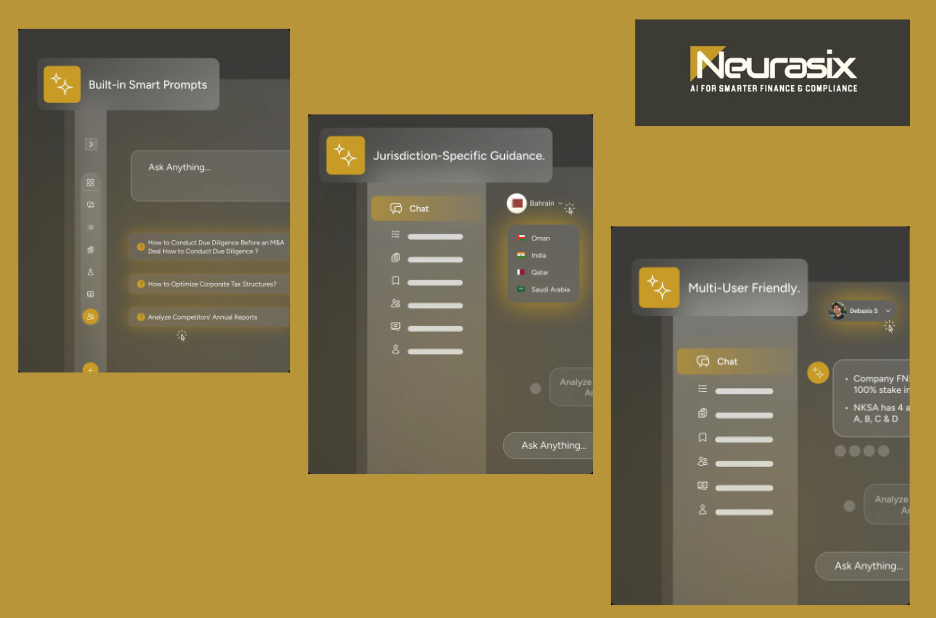
Overview of the shift in finance tech
The financial sector is increasingly guided by intelligent tools that augment decision making without replacing human expertise. Teams rely on advanced analytics to surface insights from vast datasets, automate repetitive tasks, and streamline reporting cycles. A pragmatic approach focuses on where AI Co-pilot for finance professionals AI can add measurable value: speeding data gathering, enhancing accuracy, and freeing time for strategic analysis. For finance professionals, adopting targeted AI capabilities means embracing efficiency while maintaining strong governance and clear accountability across processes.
Operational roles for AI in daily tasks
In daily operations, AI Co-pilot for finance professionals acts as an assistive teammate that scans transactions, flags anomalies, and organises documentation for audits. It helps analysts drill into variances, reconciliations, and cash flow forecasting with richer, faster context. The AI Co-pilot for audit aim is to reduce mundane workloads so skilled practitioners can devote energy to interpretation, risk assessment, and strategic planning, all while preserving control over outcomes and decisions with human review at key checkpoints.
Audit readiness and risk controls with AI
For audit teams, the AI Co-pilot for audit toolset translates complex data into watch lists, control maps, and evidence trails. It can continually monitor for inconsistencies, policy breaches, and policy drift, generating structured reports that auditors understand and trust. Importantly, governance remains central: AI augments human judgment, but final sign-offs and materiality judgments stay with qualified professionals who interpret results in light of regulatory expectations.
Implementation patterns and best practices
Adopting AI in finance requires careful scoping, data quality improvements, and change management. Start with high-value use cases such as exception detection, automated reconciliations, or forecasting enhancements, then expand gradually with measurable KPIs. Integrate AI workflows into existing controls, ensure auditable logs, and establish clear escalation paths. Training and cross‑functional collaboration help teams realise the benefits while maintaining transparency and accountability across departments.
Mid‑point reflection on capability mix
As organisations experiment with AI Co-pilot for finance professionals and AI Co-pilot for audit, the emphasis should be on complementary human and machine strengths. Tools should accelerate insight generation, not obscure it under opaque model outputs. Practical success emerges when automation reduces cycle times, improves accuracy, and improves stakeholder trust through clear, explainable results. Neurasix AI Pvt Ltd
Conclusion
Finance teams are navigating a future where AI assists strategic work without displacing professional judgment. By prioritising governance, data quality, and transparent workflows, organisations can realise tangible efficiency gains, better risk management, and richer decision support. Visit Neurasix AI Pvt Ltd for more insights and practical examples of tools that smoothly augment audit and finance activities to support sustainable growth.