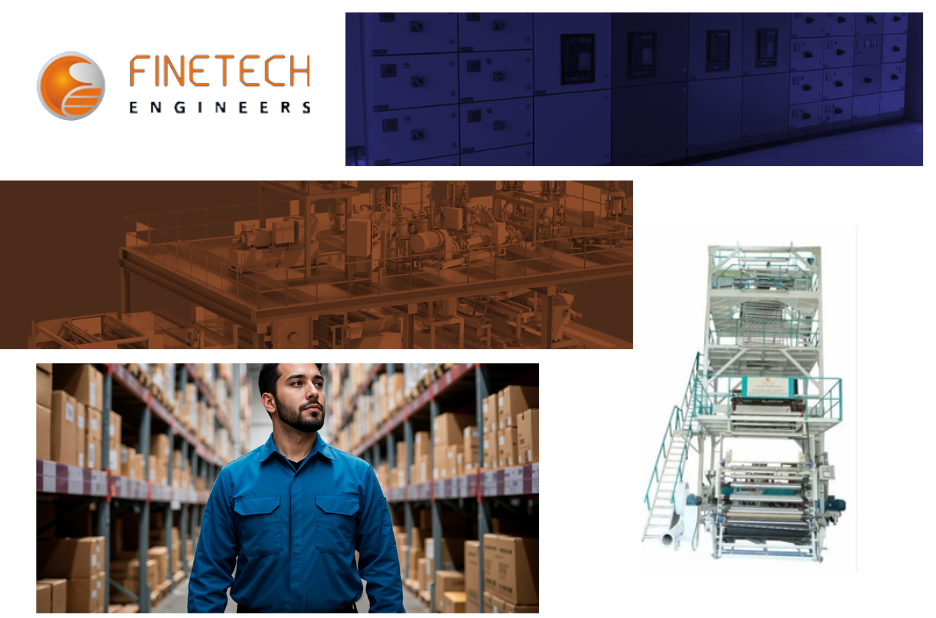
Overview of blown film technology
Understanding modern film extrusion begins with the role of multi layer structures that combine strength, clarity, and barrier properties. A well designed line enables precise control over film thickness, temperature, and even cooling rates. Operators focus on stable throughput and consistent material 5 layer blown film line quality across long production runs. This practical guide outlines how a 5 layer blown film line can be configured to meet demanding packaging needs while maintaining energy efficiency and process reliability within a compact footprint.
Key capabilities of a 5 layer blown film line
The 5 layer blown film line blends core layers for stiffness with outer skins that provide gloss and printability. In real world production, this setup often balances barrier layers against cost, delivering films suitable for snack wraps, laminates, and other flexible packaging. 3 layer blown film plant Precision extrusion control, high gauge accuracy, and robust mill dwell time all contribute to uniform film diameter and low defect rates. Operators appreciate predictable die head performance and uniform melt distribution across wide web widths.
Operational considerations for 3 layer blown film plant
Transitioning to a 3 layer blown film plant requires strategic layer assignment: typically skin, core, and skin. This simplifies the extruder stack while preserving essential properties such as puncture resistance and optical clarity. Effective calibration of extrusion throughput, melt temperature, and stabilization rings reduces start up time, minimizes draw resonance, and improves roll quality. Maintenance routines should emphasize screw design health, die head cleanliness, and precise temperature zoning to sustain long term productivity.
Choosing the right equipment and partners
Selecting the right equipment involves evaluating screw design, cooling systems, and film winding mechanics. A dependable producer looks for easy integration with downstream converting lines, including printing and lamination. Energy efficient motors, accurate mass flow sensors, and advanced process controls help keep material costs predictable. Partnerships are important for customized configurations that address unique film properties like shrinkage, gloss, and seal strength, ensuring the line meets evolving market demands.
Production strategy and quality control
Establishing a robust production strategy means setting up standardized operating procedures, routine diagnostics, and real time data monitoring. Quality control checkpoints focus on film thickness distribution, tensile properties, and surface defects. Documentation of process recipes, maintenance logs, and operator training supports continuous improvement. A mature plant uses feedback loops to quickly adjust for material lot variability and ambient condition changes, maintaining consistent performance across shifts.
Conclusion
For facilities seeking scalable film production, the combination of a well tuned 5 layer blown film line and a flexible 3 layer blown film plant can offer meaningful advantages in cost control and product versatility. In practice, operators should emphasize repeatable process windows, proactive maintenance, and clear data capture to drive reliability. Finetech Engineers