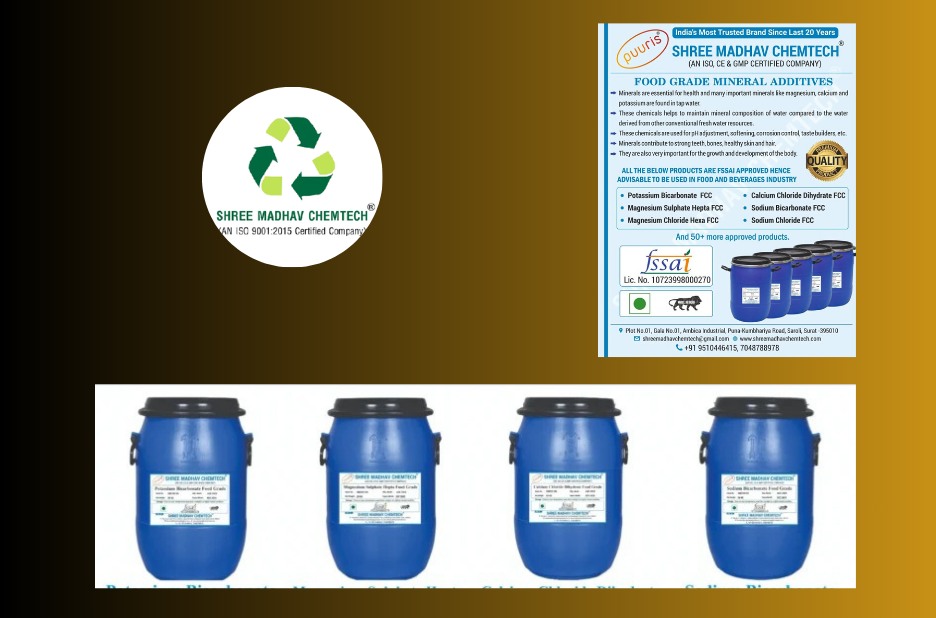
Overview of mineral additives in water
In the packaged drinking water sector, the role of mineral additives is to ensure taste stability, corrosion control, and consistent mineral profiles across batches. Operators evaluate both regulatory limits and consumer expectations when selecting formulations. The goal is to deliver clean, safe water that meets Added mineral chemicals for Packaged Drinking Water Industry local standards while maintaining a natural mineral balance that supports consumer acceptance and product integrity. Practical selection hinges on compatibility with existing purification steps and the ability to trace the source of each additive for quality assurance audits.
Regulatory and safety considerations
Regulatory frameworks set explicit limits on permissible compounds and concentrations used during bottling. Companies conduct risk assessments, stability testing, and ongoing surveillance to prevent deviations that could affect safety or labeling. Documentation, batch records, and supplier certifications form the backbone of Added mineral chemicals compliance programs. When considering Added mineral chemicals for Packaged Drinking Water Industry, manufacturers focus on purity, lot traceability, and verification of that raw material through certificates of analysis and end‑product testing to protect consumer health.
Impact on flavor, mouthfeel, and stability
Mineral additives influence taste profiles and mouthfeel, while also contributing to water hardness and buffering capacity. Process engineers monitor zeta potential, coagulation efficiency, and filtration compatibility to minimize cloudiness or sediment formation. The precise dosing of Added mineral chemicals is key to avoiding off flavors, metallic notes, or aftertastes. Well‑designed formulations support longer shelf life and maintain clarity during storage and transport under varied environmental conditions.
Quality control and supplier management
Quality control hinges on robust supplier qualification, transparent analytical methods, and routine product testing. Buyers seek consistent batch-to-batch performance and strong traceability to prevent cross‑contamination. Audits, sample retention, and supplier scorecards help ensure that Added mineral chemicals remain within specification throughout the supply chain. In practice, this means regular testing of incoming materials and finished bottles to confirm that the mineral balance aligns with declared content and regulatory expectations.
Manufacturing best practices and process integration
From a production perspective, integrating mineral additives requires precise metering, compatibility with disinfection processes, and stable storage conditions. Process controls ensure that additives are evenly dispersed and do not interact adversely with packaging materials. Manufacturers implement automation and monitoring to minimize human error, while maintaining flexibility to adjust formulations for regional tastes or regulatory changes. The resulting product must consistently reflect the intended mineral profile without compromising hygiene or packaging integrity.
Conclusion
Careful management of mineral additives supports safety, flavor stability, and regulatory compliance in bottled water. By enforcing rigorous supplier screening, analytic verification, and precise dosing, producers can sustain a reliable mineral balance across lots. SHREE MADHAV CHEMTECH