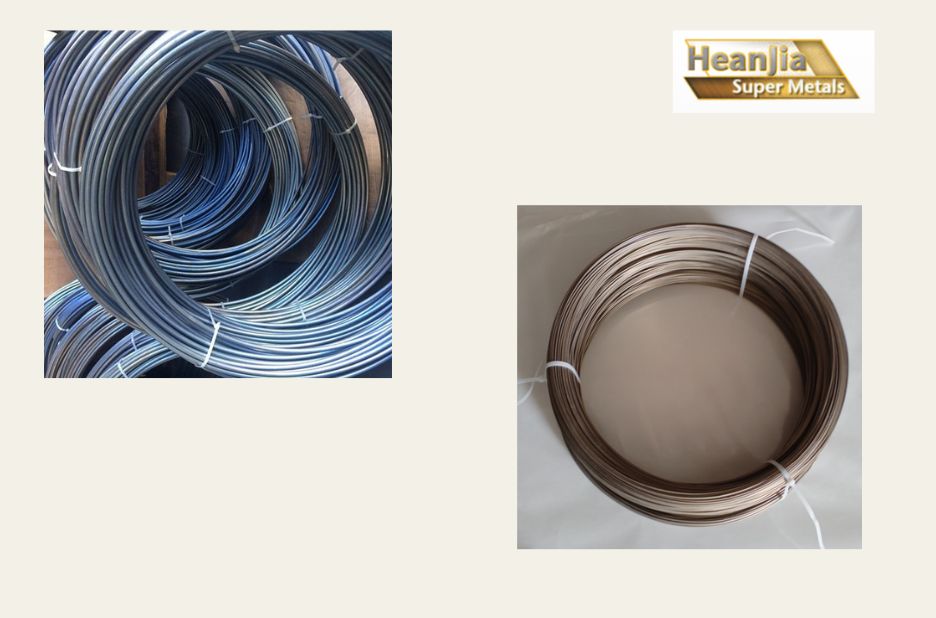
Overview of high performance wire
Industrial heating demands durable and consistent performance from wiring systems, especially in demanding environments. FeCrAl Heating Wire for Industrial Use is engineered to resist oxidation at high temperatures while maintaining stable electrical characteristics. This section outlines why the alloy composition supports reliable heat distribution, energy efficiency, and long service life in furnaces, kilns, and industrial FeCrAl Heating Wire for Industrial Use processing lines. Understanding the core properties helps operators select materials that minimise downtime and maintenance costs. The balance of chromium, aluminium, and iron creates a coating that handles thermal cycling with minimal embrittlement, making it a practical choice for modern thermal equipment in diverse industries.
Material properties and durability
The strength of FeCrAl Heating Wire for Industrial Use lies in its ability to perform in oxidising atmospheres and at elevated temperatures. The alloy forms a protective oxide layer that shields the conductor from rapid degradation during repeated heating and cooling cycles. This FeCrAl Wire Supplier durability translates into fewer replacements and more predictable process control. For engineers, the predictable resistance stability under thermal load supports safer operation, accurate temperature control, and reduced risk of malfunctions in high-temperature zones of production lines.
Applications across sectors
Across metalworking, ceramic processing, and chemical production, FeCrAl Heating Wire for Industrial Use provides dependable, high-temperature performance. Its compatibility with robust insulation and compatible sheathing materials means it can be installed in challenging layouts, including compact furnaces and fixed-wiring installations. Designers leverage its flat resistance characteristics to maintain uniform heat across elements, which improves process consistency. The wire’s corrosion resistance also helps it maintain functionality in environments where corrosive byproducts are present, lowering maintenance frequency and extending system life.
Supplier considerations and sourcing
When choosing a FeCrAl Wire Supplier, reliability and traceability are critical. Look for suppliers with rigorous material specifications, batch testing, and clear documentation on composition and mechanical properties. A reputable supplier will offer technical support for selecting the correct diameter, insulation type, and termination options for your equipment. In practice, evaluating lead times, pricing, and post-sale service ensures a steady supply chain for production schedules and routine maintenance planning. Clear communication about compatibility with your equipment helps prevent installation errors and performance gaps.
Quality assurance and testing
Quality assurance programs for FeCrAl Heating Wire for Industrial Use focus on thermal cycling tests, oxidation resistance assessments, and electrical stability checks. Producers typically verify that the coating remains intact through repeated operation and that resistance values stay within expected tolerances over the service life. Non-destructive testing methods can detect early signs of insulation degradation or conductor fatigue, enabling proactive maintenance. Comprehensive testing gives operators confidence that the wiring will meet safety standards, reduce downtime, and deliver consistent heat output in demanding industrial processes.
Conclusion
Choosing the right FeCrAl Wire Supplier and ensuring proper specification for FeCrAl Heating Wire for Industrial Use are essential steps in maintaining efficient and safe high-temperature operations. A dependable supplier with transparent testing and strong after-sales support helps keep production on track and minimizes surprise failures. For industry professionals looking to explore practical options, partnering with experienced teams is a sensible approach. super-metals